Is Artificial Turf Safe for Dogs? (Pet Owner's Guide)
Honest answer on safety, the lead and PFAS questions, urine handling, smell prevention, and what to actually buy if you have one dog vs. five dogs vs. a kennel.
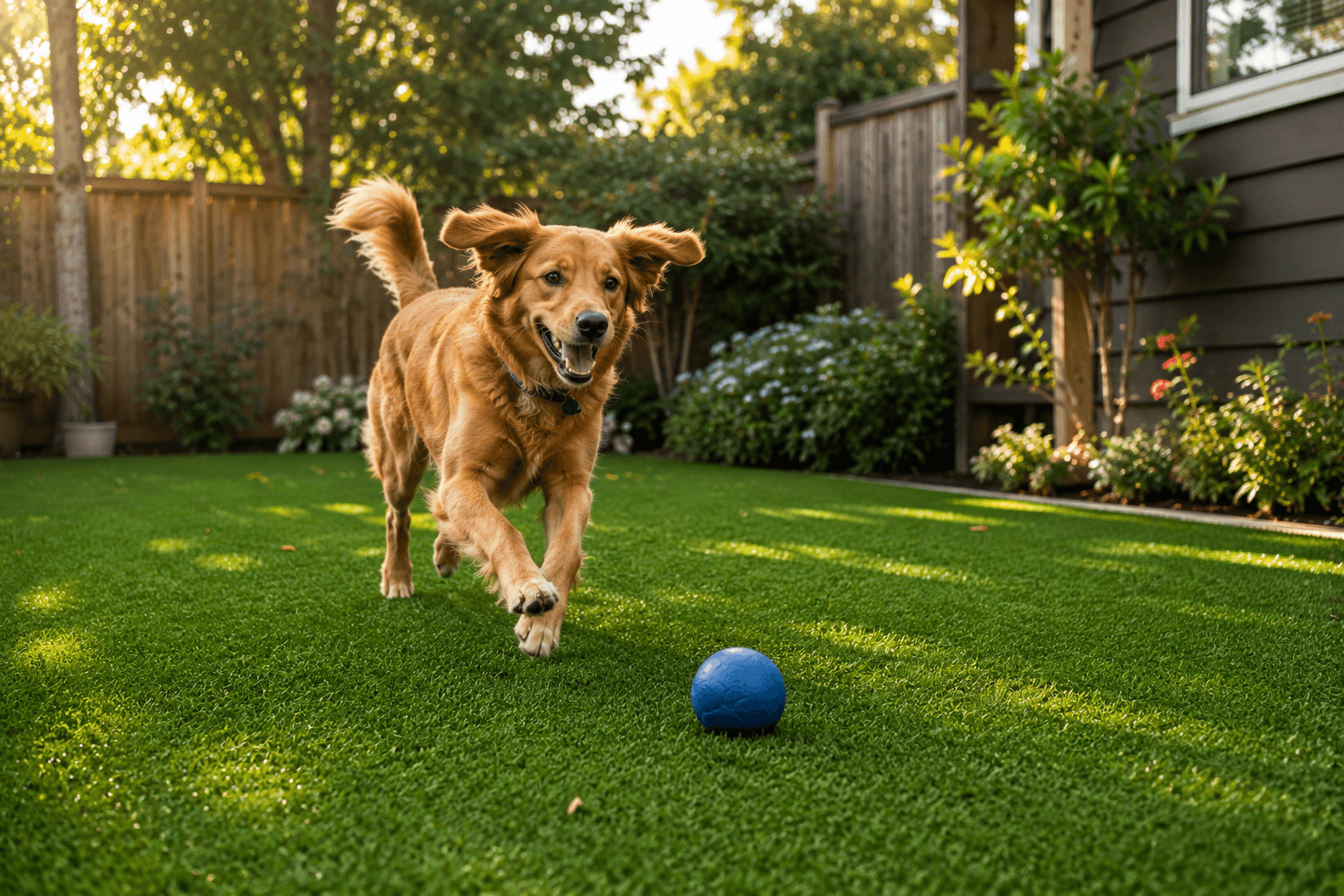
Short answer: yes, with the right product and the right install. Long answer: there are real trade-offs, real things to ask, and real products to avoid. Here's the honest version, from a company that installs pet yards every week.
The safety questions, answered straight
Lead
Modern landscape and pet-grade turf is lead-free. The scare cycle in 2008 was about older sports field turf using lead-based pigments. That's been illegal for residential turf for over a decade.
Ask any installer for the lead-content test on their products. If they can't produce one, walk.
PFAS ("forever chemicals")
This is the current real conversation. Some older turf backings used PFAS in the manufacturing process. Newer premium turf — including everything in our catalog — is PFAS-tested and free of intentionally-added PFAS compounds.
Microplastics from blades
Real but minor. Turf blades shed a tiny amount of microfiber over years of wear. Same general category as fleece blankets shedding in the wash. Not ingested in meaningful quantities by pets.
Heat
Turf gets hotter than real grass in direct summer sun. In Salem-Portland this is a 6-week problem (July–early September). Mitigations:
- Light a hose over it for 20 seconds — drops the surface temp 25°F instantly
- Shade structure or umbrella where the dog likes to lie
- Lighter-color turf runs ~10°F cooler than dark green
The smell problem (and how to actually solve it)
This is what trips up most pet households. The wrong turf or wrong infill and your yard smells like a kennel by month 6. The right setup and you get years of fresh.
What causes the smell
It's not the urine itself — it's urine that doesn't drain through, bacteria that grows in trapped infill, and ammonia building up. Three failure points, all preventable.
The setup that doesn't smell
- Pet-grade turf with 100% perforated backing — urine drains straight through, doesn't pool
- Antimicrobial infill (zeolite-based or specialty pet sand) — kills the bacteria before it produces ammonia
- Proper base drainage — gravel sub-base that lets urine percolate away, not pool above
- Weekly hose rinse — 30 seconds with a hose washes any residual through
That setup, on most yards, will go years without odor. Our Pup Turf is built around exactly this stack.
What causes the smell to come back
- Cheap silica infill instead of antimicrobial — saves $150, costs you years of smell
- Standard landscape turf with partial-perforation backing — urine pools
- Skipped base drainage prep — urine sits at the turf-soil boundary
- Not rinsing for 3 months in summer — buildup
What to buy for different pet situations
One dog, occasional use
Standard mid-grade pet turf is fine. Wave Blade with antimicrobial infill works well. Budget: ~$11–14/sqft installed.
2-3 dogs, daily use
Step up to pet-specific turf with heavier face weight + 100% perforated backing. Pup Turf is the right call. Budget: ~$12–15/sqft installed.
Multiple dogs, kennel/boarding
Pet-rated turf, antimicrobial infill, drainage-optimized base, and consider a hose-bib install at the corner of the run for daily rinses. Budget: ~$14–18/sqft installed, more if you're building proper drainage infrastructure.
The chronic-marker dog
Some dogs are just bad about hitting the same spot. Antimicrobial infill + weekly rinse + occasional vinegar-water spray (1:10 mix) handles it. Don't use bleach — it bleaches the blades.
Frequently asked dog-and-turf questions
Will my dog dig through it?
Once it's installed properly with secured edges and an aggregate base, even committed diggers usually give up after a few attempts. The base isn't dirt-friendly — there's nothing to dig into. Some dogs scratch at the surface initially out of confusion; that fades.
Can my dog eat the infill or blades?
Some puppies try once. Most adult dogs ignore it. Silica sand infill is not toxic but isn't food either. Blades are firmly tufted and don't pull out easily.
What about the dog's paws?
Pet-grade turf is softer than concrete or pavers and a fine surface for paws. The summer-heat issue is the main thing to manage.
Will the turf affect my dog's allergies?
Most dogs do better on turf because they're not inhaling lawn pollen, grass cuttings, or chemical fertilizers. We've had vet referrals specifically because of allergic dogs.
Or chat with Turfy 🌱about your specific dog setup — breed, count, yard size, indoor/outdoor mix. He'll route you to a real quote.