How Long Does Artificial Turf Actually Last?
Honest answer with the variables that matter: turf grade, install quality, climate, sun exposure, dog traffic, and what kills turf early. Plus what 'lifetime warranty' actually means.
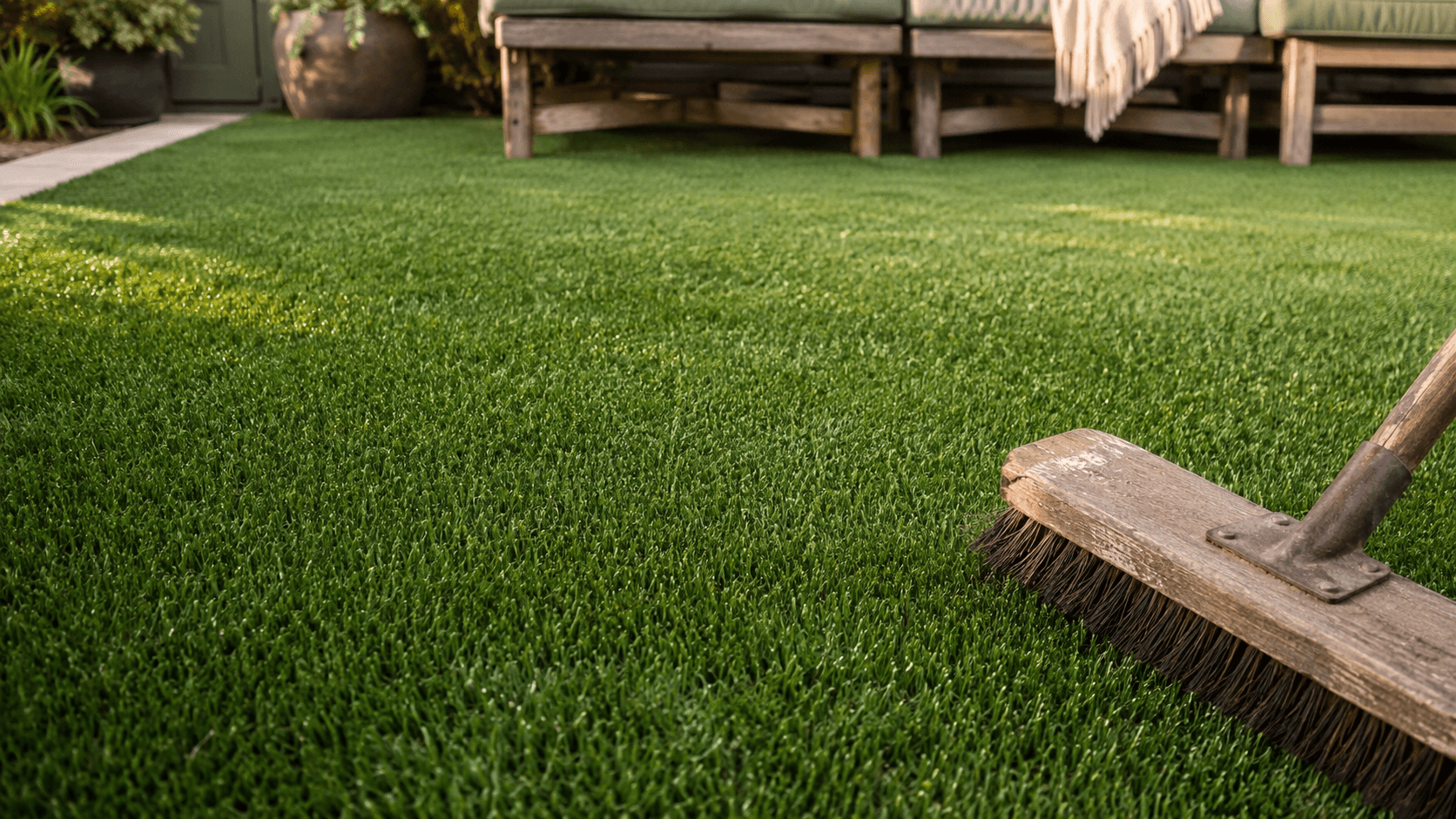
The short answer: 15 to 25 yearsfor a properly installed premium turf in the Pacific Northwest. But the longer answer matters, because it's the difference between getting 20 good years and replacing the whole thing at year 7.
The honest range
| Budget turf, average install | 5–8 years |
| Mid-grade turf, proper install | 10–15 years |
| Premium turf, premium install | 15–25 years |
| Sport-grade turf (no infill) | 18–22 years |
What turfs in the higher end of those ranges have in common: heavy face weight (90+ oz/sqyd), polyethylene blades (not nylon), UV-stable yarn, a proper base, and someone who actually brushes it once a year.
What ages turf the fastest
1. Bad base prep
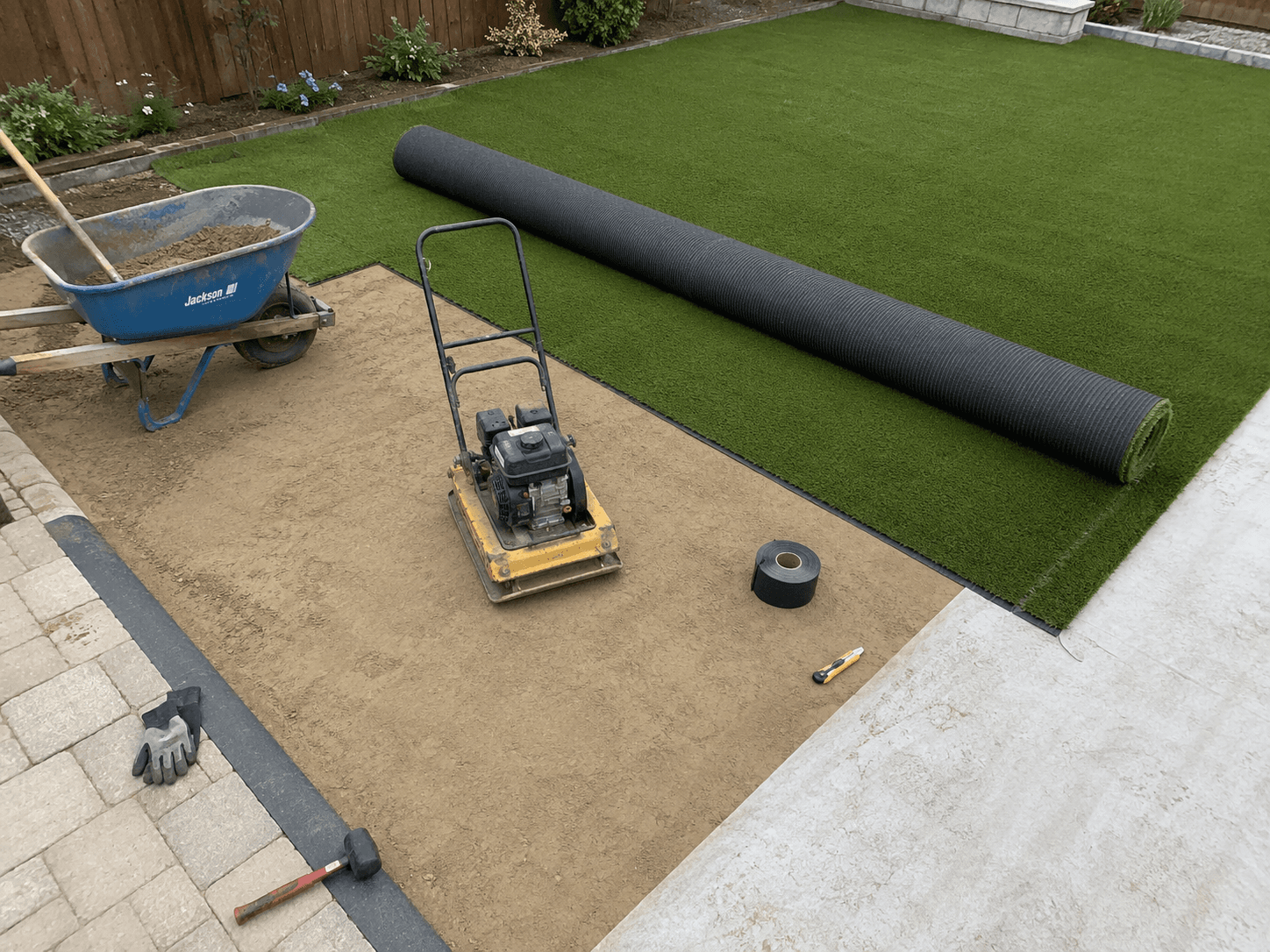
The #1 killer is what's under the turf, not the turf itself. If the installer skimped on aggregate or didn't compact it properly, the turf will ripple, develop low spots, and pool water within 2–4 years. At that point the turf is fine but the install is dead.
2. Sun + heat
UV is what makes turf blades go limp and pale. Quality turf is UV-tested to ~3,000 hours of exposure before color shift. Cheaper turf hits that mark in year 3.
In Salem-Portland, this matters less than in Arizona or Texas — but south-facing yards still see real UV. Check the spec sheet for the UV-stability rating before buying.
3. Dogs (heavy traffic)
Pet households accelerate turf wear by about 30%. The blades don't wear out faster, but the high-traffic paths flatten and the infill compacts unevenly. If you have multiple dogs, look at Pup Turf with proper antimicrobial infill — built for it.
4. Maintenance, or lack of it
Yearly brushing (a power broom or stiff lawn rake) keeps blades upright. Skip this and you cut the lifespan in half.
What about the warranty?
Manufacturer warranties typically cover 10–20 years against fading, wear, and seam failure. Important caveats:
- The warranty covers the turf, not the install. A bad install voids it.
- "Lifetime warranty" usually means "15 years" in the fine print. Read it.
- UV warranty and wear warranty are often different terms — UV might be 8 years, wear 15.
- Most manufacturer warranties exclude pet damage and intentional damage.
How to tell when your turf is actually dying
- Blades won't stand up even after a hard brushing — fiber memory is gone.
- Visible color fade on the south-facing side compared to under furniture or shade.
- Seams separating — usually means seam tape failed or the base shifted.
- Backing visible through blades in high-traffic paths — face fiber has worn through.
- Won't drain anymore — usually a base issue, not a turf issue, but it's time to redo the install.
The math
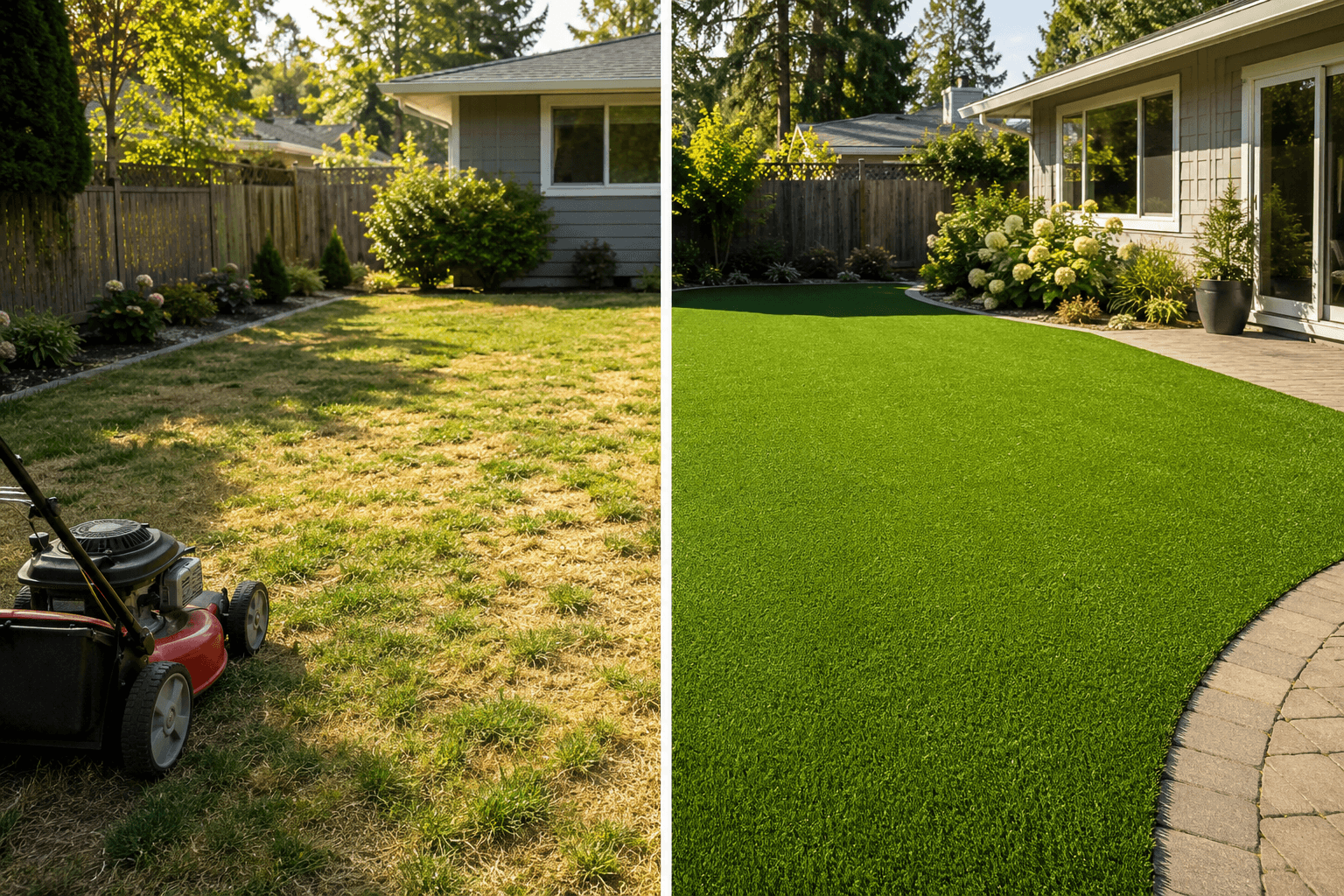
A $13,000 install that lasts 20 years works out to $650/year. A real lawn in Salem costs $800–$2,000/year in water, mowing, fertilizer, and mower maintenance — and you still have a lawn that looks like crap in August. That's the comparison that actually matters.
Or get a real install quote — upload a photo on our estimator and see what your specific yard would cost.