Best Artificial Turf for Pacific Northwest Weather
Salem-Portland weather is hard on turf — months of rain, hard winters, surprise dry summers. Here's what to spec so you get 20 years, not 7.
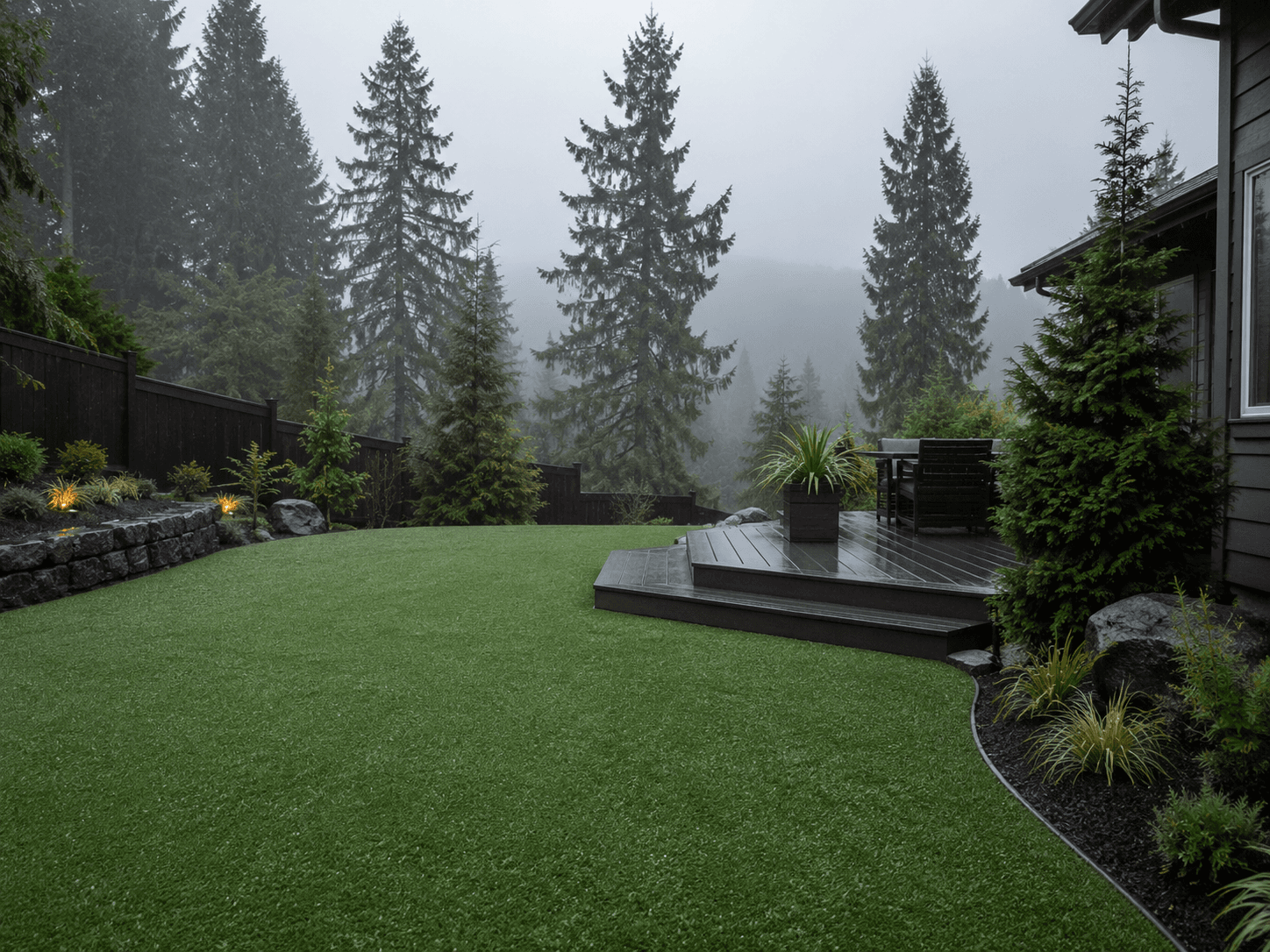
Most artificial turf is spec'd for California or Texas — places where the worst weather is just heat. The PNW has a different problem: 36–40 inches of rain a year, freezing nights, soggy clay soil, and a 3-month dry stretch most years. Pick the wrong turf and the install dies fast.
What kills turf in the PNW
- Standing water from poor drainage — supports algae, smells, eventually destabilizes the base
- Freeze-thaw cycles — wet base aggregate that freezes ripples the turf
- Clay subsoil — Willamette Valley soil holds water for weeks
- Moss + algae on shaded turf during wet seasons
- Surprise UV in July-August when low-rated turf fades fast
What to spec for the PNW
Backing: 100% perforated
Non-negotiable. Partial-perforation backing pools water. In PNW rain volumes you need water moving through the turf, not sitting on the backing. Every product in our catalog uses fully-perforated backing.
UV-stable yarn
Look for "UV-stable to 3,000+ hours" on the spec sheet. Cheaper Chinese turf rated to 1,500 hours fades in 4 PNW summers. Premium polyethylene with proper UV stabilizers lasts 15+ years.
Heavy face weight
Lighter turf (60–75 oz) flattens faster in our wet winters when the blades stay damp and get stepped on. Stick with 85+ oz for residential, 90+ oz for high-traffic yards.
Color blend matters here
Cool-blue blends (like our Willamette Blue) look natural year-round because real PNW lawns have that cool tone. Hot-green California-style turf looks fake against gray winter skies.
What to spec under the turf
90% of PNW turf failures are base failures. The turf itself is fine — the install wasn't built for the rain.
Base depth
3.5–4 inches of compacted decomposed granite or class II base. Sport installs run 5–6 inches. Skimping here is the #1 way to fail.
Drainage
Required, not optional:
- Slope — grade the sub-base to drain away from buildings at 1–2% minimum
- Perforated drain pipe in low spots, daylighted to a swale or storm drain
- French drain for chronic-wet yards or yards with clay subsoil
- Gravel sump at the lowest point if there's nowhere to daylight
Shade + moss
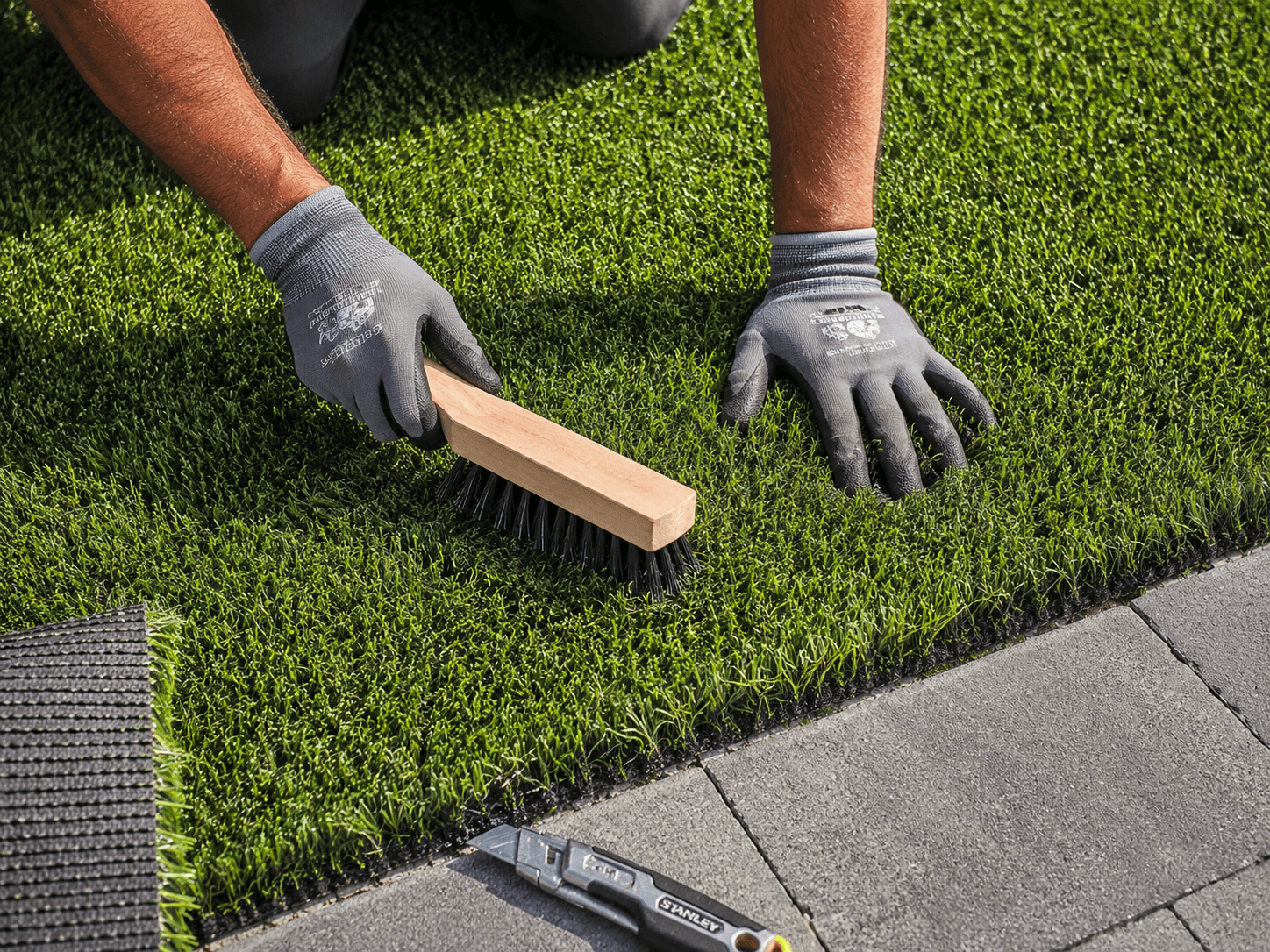
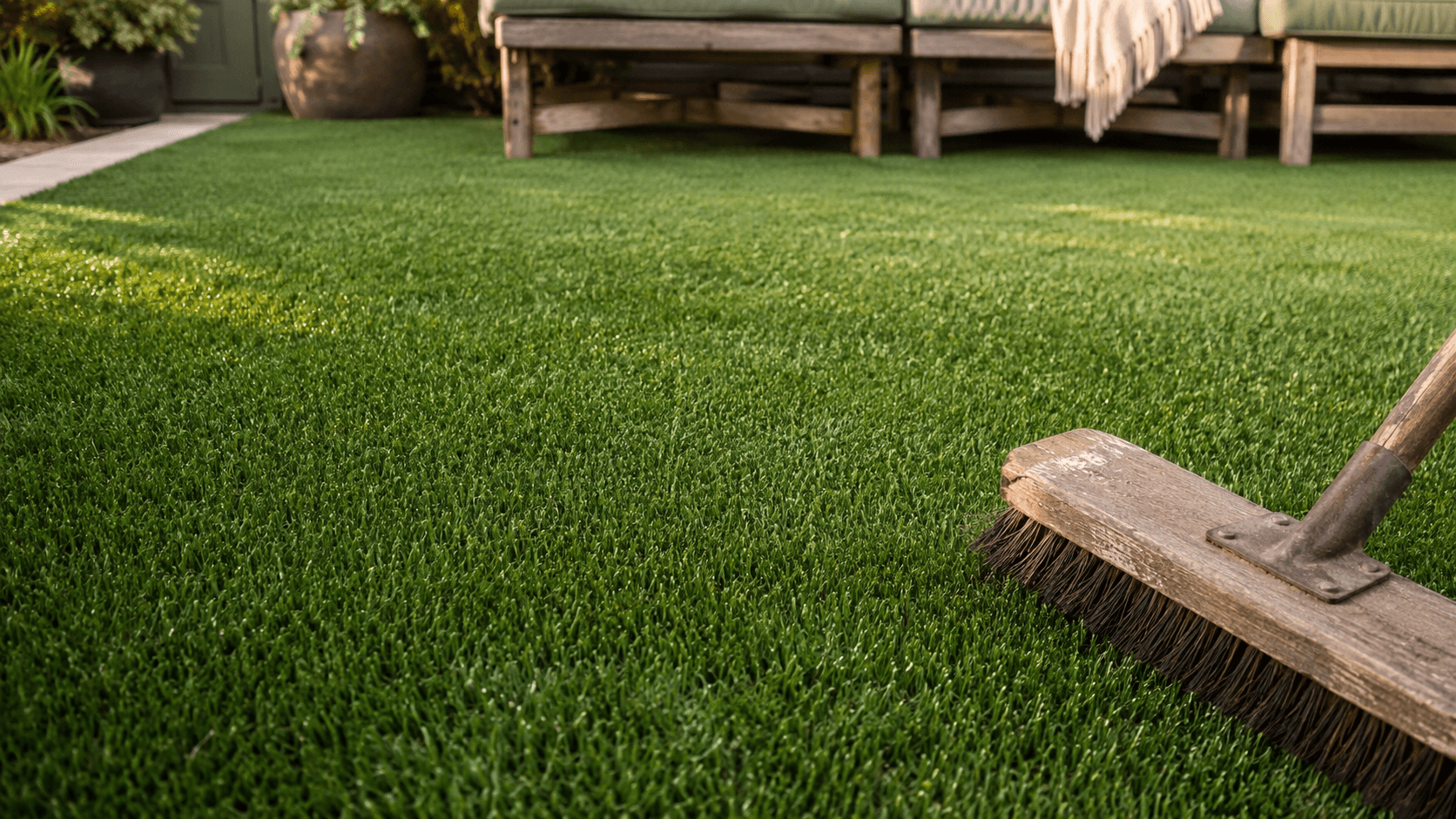
Shaded turf in the PNW grows moss on the blades during the rainy months. It washes off with a hose + soft brush, but if you have heavy shade and lots of rain, plan on a 20-minute moss scrub twice a year.
Don't use moss killer — most contain zinc or iron sulfate which can discolor the turf. Stick with physical removal or a mild vinegar-water mix.
Winter behavior
- Snow: Don't shovel with metal blades. Let it melt or use a plastic snow shovel held flat.
- Ice: Don't use rock salt. Sand or kitty litter for traction; rinse off when it thaws.
- Freeze: Frozen turf is brittle — don't walk on it heavily until it thaws.
Summer behavior
- Heat: Hose down before peak-sun use. Drops surface temp 25°F in 30 seconds.
- Sun fade: Only a real risk with under-spec'd turf. Premium PE-yarn stays color-true.
- Drought watering: Skip it. The whole point.
Our PNW recommendation
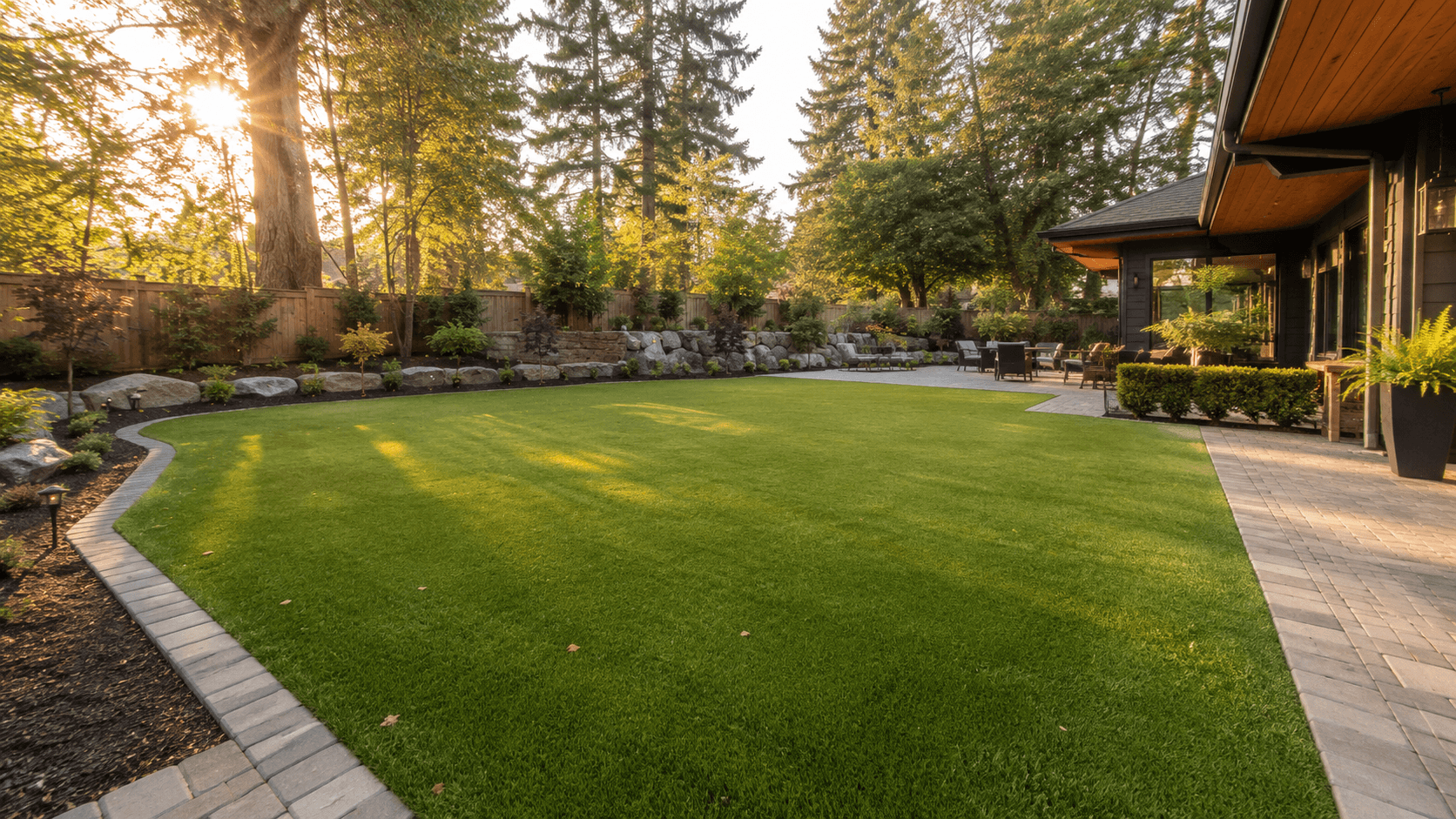
For most Salem-Portland homeowners: Wave Blade or Willamette Blue over a 3.5-inch compacted base with proper drainage. Add a paver border for clean edges. 10-year manufacturer warranty + our 2-year workmanship.
For pets: Pup Turf with antimicrobial infill — built for the smell-and-drainage combo PNW pet yards need.
Or chat with Turfy 🌱about your specific yard conditions — shade, soil, slope, traffic. He'll route you right.