Artificial Turf Maintenance: The Actual List
What you actually need to do, how often, with what tools. No fluff — the realistic maintenance schedule that keeps turf looking new for 15+ years in the Pacific Northwest.
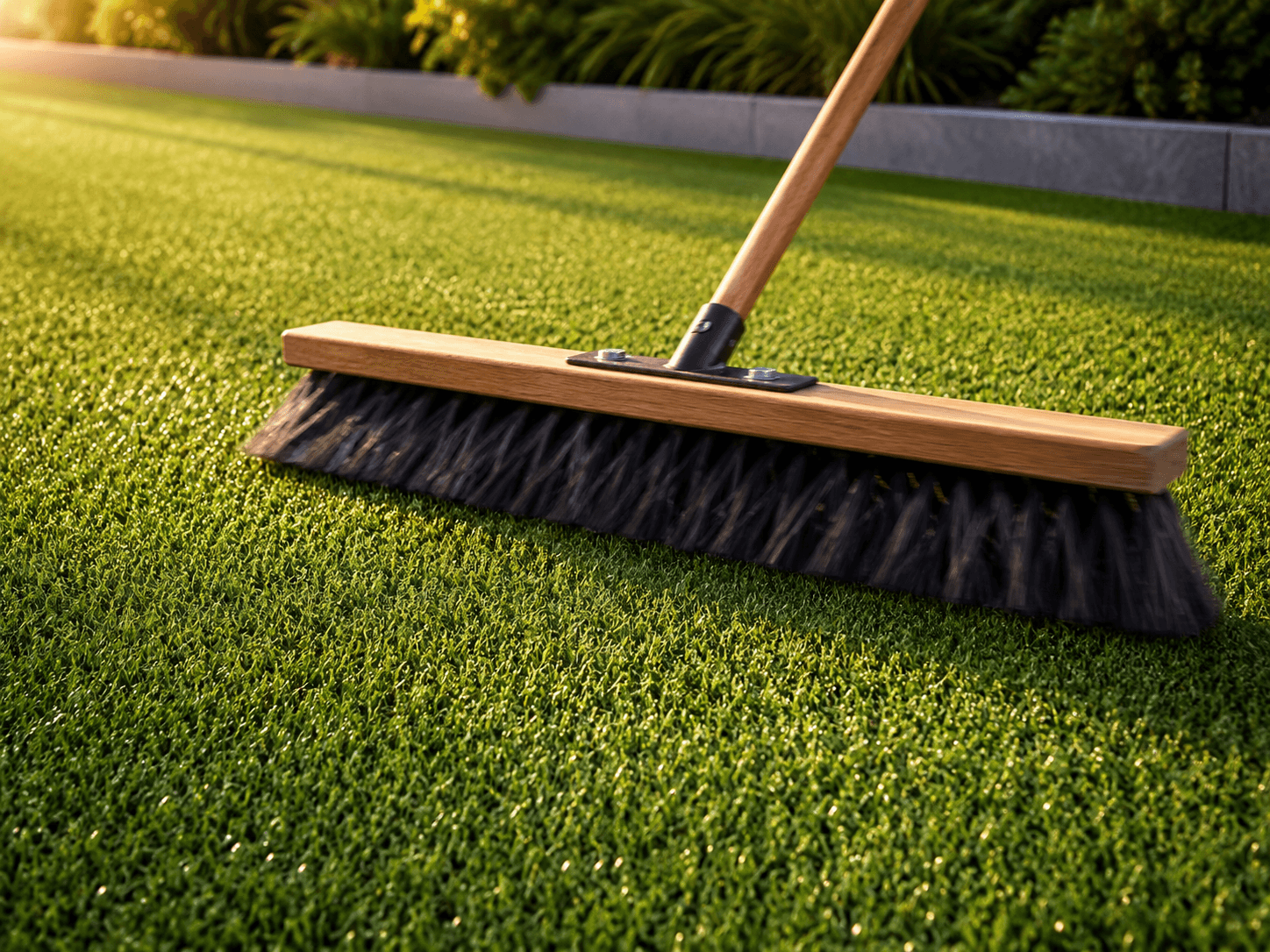
Artificial turf is sold as "maintenance-free". It isn't — it's low-maintenance. The difference is about 2 hours a year. Here's exactly what those 2 hours look like.
Weekly (about 30 seconds)
- Pet yards: hose-rinse where the dog goes. 30 seconds.
- High-traffic areas: walk over them — that's it. Footfall actually helps keep blades upright.
Monthly (5 minutes)
- Visual check: any flat spots forming? Visible seams? Debris on edges?
- Pick up debris: leaves, branches, anything sitting on the turf. Long-term debris stains.
- Spot rinse: any animal waste, bird poop, or spilled food.
Quarterly (15 minutes)
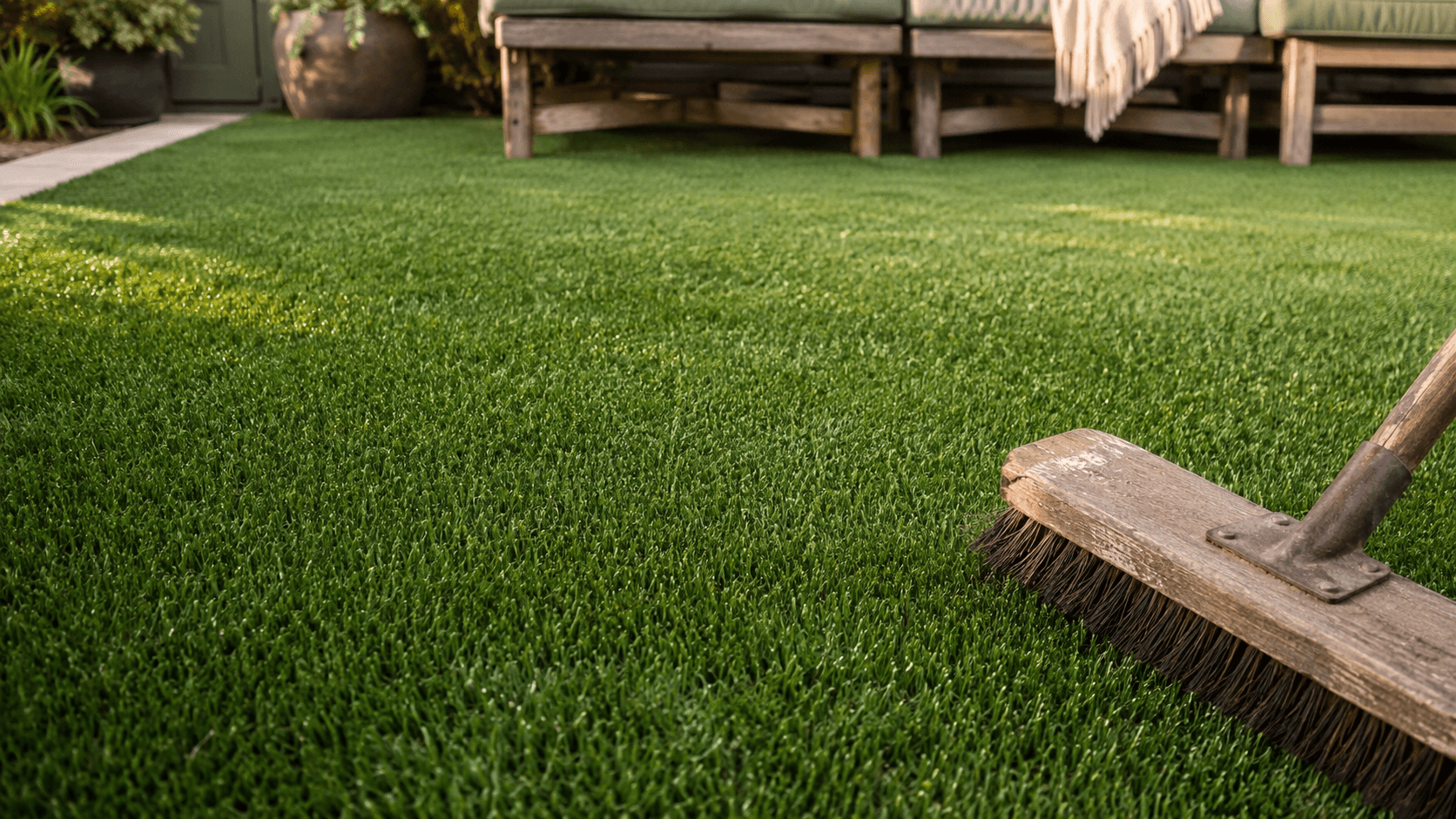
- Brush against the grain in high-traffic areas. Stiff push broom works. Power broom if you have one. Restores upright blades.
- Inspect seams — any lifting? Catch it early before it's a redo.
- Pet yard: vinegar-water spray (1:10 ratio). Kills lingering ammonia bacteria.
Yearly (1–2 hours)
- Full brushing: entire surface, against the grain. Power broom rental ($60/day) or a stiff push broom + elbow grease.
- Check infill levels: walk the surface, blades should stand. If they lie flat, you're due for an infill top-up.
- Edge inspection: any pull-up? Re-stake or re-nail.
- Drainage check: hose it down hard. Water should disappear in under 90 seconds. If it pools, you have a drainage issue (call us).
Every 5–7 years
- Infill top-up: $200–400 of sand, applied + brushed in. Restores blade support and weight.
- Deep clean for pet yards: dedicated turf cleaner ($30 at hardware stores), full surface application.
Things that come up — and what to do
Spilled coffee, wine, soda
Rinse with cold water. If it stained, a 1:10 vinegar-water or 1:20 bleach-water (test in a hidden spot first) handles it.
Gum, sap, chewed-up things
Freeze with an ice cube for 60 seconds, then peel off. Don't scrape with anything sharp.
Cigarette burn, ash
Turf melts. There's no fix — you either live with the small mark or patch with a leftover scrap (which is why we leave you scraps after install).
Pet vomit, bird mess
Pick up solids, rinse with hose. Done. Antimicrobial-treated turf doesn't hold the smell.
Moss in shady spots
Gentle scrub with vinegar-water, rinse. Do not use moss killer — zinc/iron sulfate stains turf.
Snow / ice
Let it melt if you can. If you must clear: plastic shovel only (never metal), held flat, push don't drag. No rock salt — sand or kitty litter for traction.
What NOT to do
- Don't use pressure washers — strips infill, can tear backing
- Don't use bleach undiluted — bleaches blade color
- Don't use solvents (acetone, paint thinner) — melts polyethylene
- Don't mow it (yes, people do this) — the blades are tufted, not growing
- Don't leave heavy planters in one spot > 30 days — permanent flat spot
- Don't park cars on it unless it's rated for vehicle traffic
Total annual time investment
- Weekly check: ~5 min/week × 52 = 4 hours/year
- Quarterly brushing: ~30 min × 4 = 2 hours/year
- Yearly deep maintenance: ~2 hours
- Total: ~8 hours/year
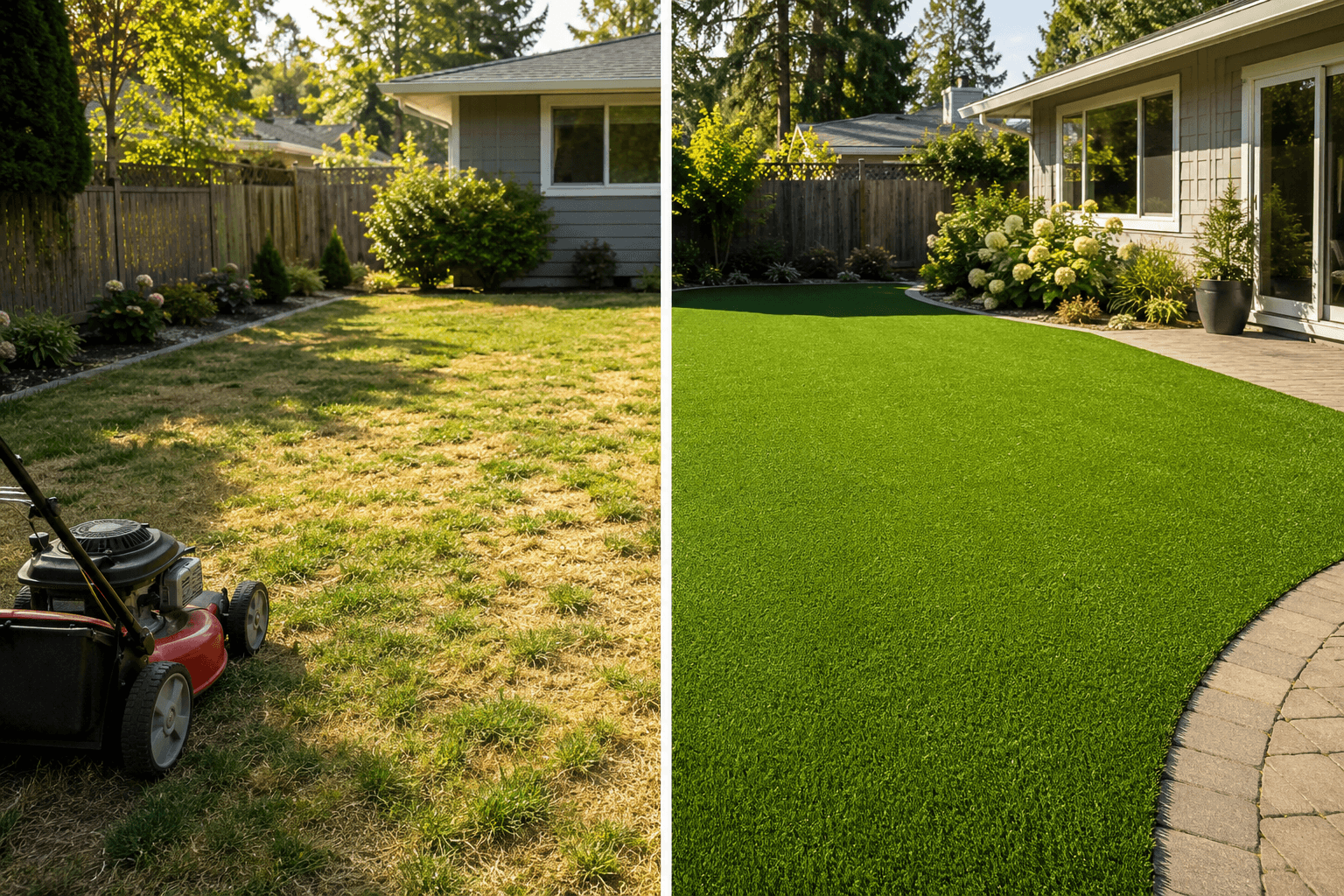
Compare to a real lawn at 30–50 hours/year of mowing, edging, fertilizing, and yelling at the dog for digging.
If you bought your turf from someone else
These tips work on any artificial turf install. If you're not sure what your turf is rated for or which products are safe — chat with Turfy 🌱, we're happy to help.